Review: How to Train Your Dragon (2025)
How to Train Your Dragon was released in 2025 and was an adaptation of the 2010 animated film with the same name. Both films were directed and written by Dean DeBlois. The animated How to Train Your Dragon was an adaptation of the book series by Cressida Cowell, but for this review, we will hold the film up against the animation.
How to Train Your Dragon takes place on the isle of Berk, where Vikings and dragons have been clashing for eons, but that changes when an ancient threat becomes a danger to both species. A friendship between Hiccup (Mason Thames), an outcast Viking, and Toothless, a Night Fury Dragon, becomes pivotal in saving both species and forging a new future for Vikings and dragons.
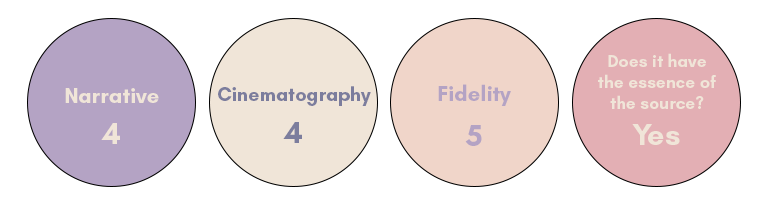
Film’s narrative: 4/5
Given the success of the original animated How to Train Your Dragon, it isn’t surprising that DreamWorks selected this film to become their first live-action remake.
Narratively, How to Train Your Dragon is the same; the feeling of this film is slightly different, almost grounded in the film medium to make this world feel believable. There’s more time spent on character development, as DeBlois mentions in his interview with CinemaBlend (2025, 3:50), that this film allowed him to “deepen the mythology, and enrich certain characters that were underserved in the animated version.” There are a small number of catalysers in the narrative that take a global approach to telling the story of the Viking diaspora, with warriors travelling from other countries and settling in Berk. More time is spent on developing the relationship between Hiccup and Astrid (Nico Parker) by fleshing out their dialogue. I do find that Astrid’s tendency to point out Hiccup’s privilege as the Chief’s son was an interesting addition to the story, as she views Hiccup as not taking this war with dragons seriously. Because, despite feeling like an outcast, Hiccup will still be protected by his father, Stoick (Gerard Butler). This opinion is contradicted when we see Astrid realise that, because of his privilege, he sees Vikings and dragons through a different lens, which goes against the grain of the rules she has grown up learning and abiding by.
Overall, this transposition adaptation kept the original’s cardinal functions. With DeBlois at the helm and John Powell back for composing, it was a smart plan to keep the film’s heart through visuals and sound.
Cinematography: 4/5
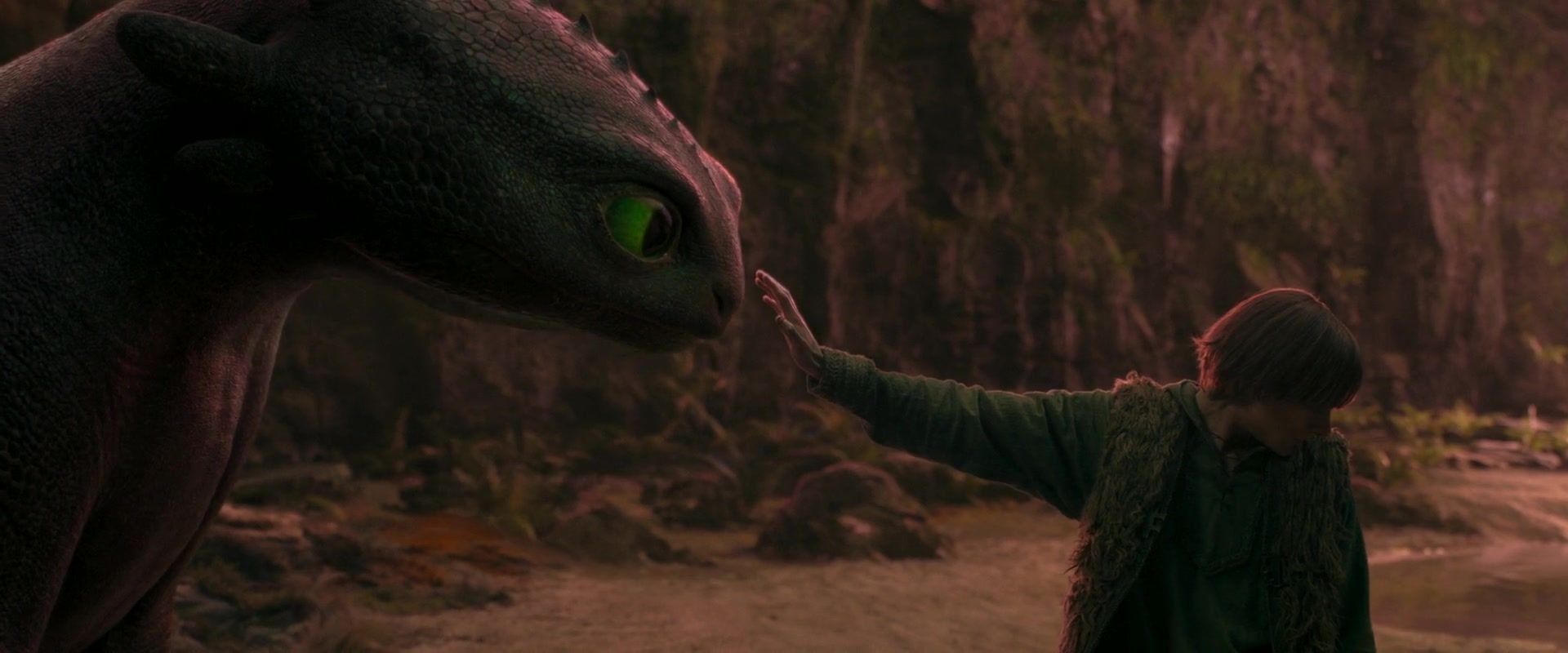
While the narrative is high fidelity, the cinematography is slightly less so. There are a couple of scenes shot-for-shot with the original, including the opening scene and most of the memorable ones, such as the moment Hiccup places his hand on Toothless. Although it is shot-for-shot with the same pacing and paired with A Really Forbidden Friendship score (an updated version of Forbidden Friendship), the animation still wins me over emotionally because the lighting and colour grading look and feel better, and the score does too. The simple change of the music lowering when Hiccup’s hand touches Toothless’s face to create the intensity of breathing a sigh of relief, whereas in the original, the film’s score ascends in that moment, evoking an emotional celebration and awe of Hiccup touching a Night Fury in “real life”.
I would love to add that while I may not have a musical ear, I love listening to music, and composer John Powell deserves his flowers for doing an amazing job of rewriting the almost-perfect scores from the animation. He brings in the rhythm of the original tracks but extends it slightly to suit the film’s pacing. Anton Smit does an amazing breakdown of the updated and additional tracks on Soundtrack World if you are interested in reading more.
How to Train Your Dragon focuses on side stories that were not delved into in the original, such as sailing to Helheim’s gate, which was glossed over, and additional scenes of Snotlout (Gabriel Howell) being ignored by his father, Spitelout (Peter Serafinowicz), for humour. The pacing in the live-action is more languid, allowing audiences to linger on the scene or the character’s expression and, by extension, I noted more close-ups or slow zooms to establish that. Some scenes are moved or changed in terms of shot types, but the reasoning is that what works in animation may look weird in live-action.
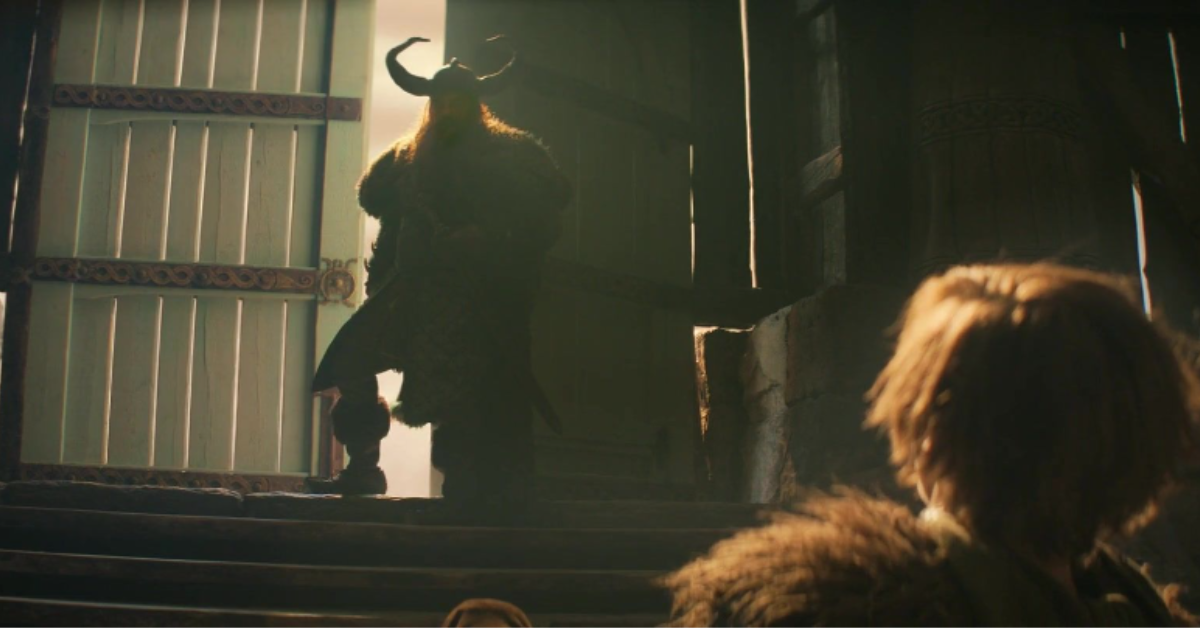
Thames and Parker did an excellent job in portraying Hiccup and Astrid. I didn’t mind Nick Frost as Gobber, but it really highlights how unique Craig Ferguson’s voice is. But hats off to Butler for coming back to play Stoick. It was worth it, and I hope that man had all the honey and lemon for his throat in voicing that gruff Viking chief. Being live-action, it made the scenes between Stoick and Hiccup more human and tense in their arguments. It’s why this scene [below] is my favourite shot. The lighting behind the towering shadow of Stoick, looking down on Hiccup, made this scene feel more intense than in the animation, showcasing that two different paths will be taken to solve this dilemma.
Fidelity: 5/5
Obviously, fidelity is a full score. Characters’ names and personalities stayed the same, as did the settings. The plot. Same. The film’s message of love, family, and friendship is all there, just as in its original.
Does it have the essence of the source? Yes.
Absolutely, yes. Having DeBlois and Powell team up helps keep the heart of the original. It pays homage to the original’s nostalgia, but this film offers a new take that will have the younger generation grow up with it. Although, do show them the original.
Is it safe to say that DreamWorks have the right idea of how to do live action remakes? With How to Train Your Dragon 2 live-action in the works, it's not hard to imagine the studio will venture into more live-action projects, given its long list of animated films in their bag.
References
CinemaBlend. (2025, June 17). ‘How to Train Your Dragon’ Live-Action Cast & Director Interviews [Video]. YouTube. https://www.youtube.com/watch?v=HNPbx5zSEVE
Disclaimer: The opinions and views expressed in this post belong solely to the author.